Groundwater, Rainfall, and Agricultural Productivity in Tamil Nadu
Environmental Economics | Data Analysis | Policy Context
Problem
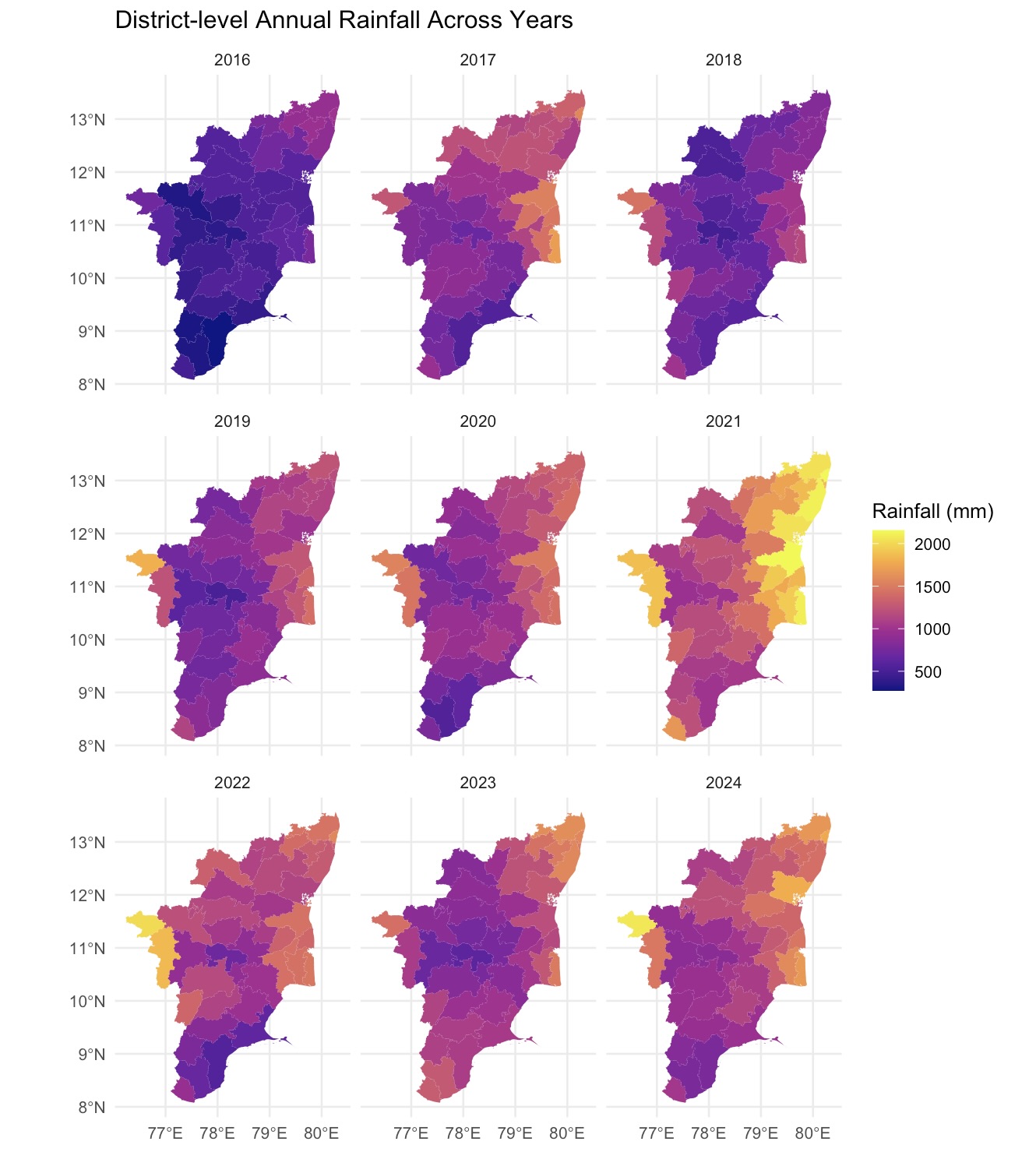
Tamil Nadu faces chronic groundwater stress alongside highly variable monsoon rainfall. Policymakers worry that overextraction may be undermining agricultural productivity, but the short-term interaction between rainfall and groundwater stress is poorly understood.
What I Did:
- Built a district-level panel dataset combining groundwater extraction statistics, crop production data, and high-resolution gridded rainfall
- Aggregated daily IMD rainfall data to district and crop-relevant seasons
- Analyzed within district variation using fixed effects panel regressions
- Examined crop-specific mechanisms with a focus on rice yields
Key Findings:
- Short-run agricultural outcomes are more sensitive to rainfall timing than contemporaneous groundwater stress
- Cropped area remains stable even in highly stressed districts
- Seasonal rainfall explains yield variation better than annual rainfall aggregates
- Results suggest short-run buffering through irrigation and adaptive practices
Why It Matters?
This challenges simplified narratives of immediate productivity collapse under groundwater depletion and highlights the importance of rainfall timing in agricultural policy and climate adaptation.
Tools:
R, panel regression, spatial aggregation, fixed-effects models
Hydrogen Garbage Trucks for the City of Palo Alto
Infrastructure Finance | Energy Policy | Decision Analysis
Client
City of Palo Alto Public Works Department
Problem
The City needed to decide whether to invest in hydrogen-powered garbage trucks under tightening zero-emission regulations, high uncertainty around hydrogen economics, and evolving federal and state policy.
What I Did
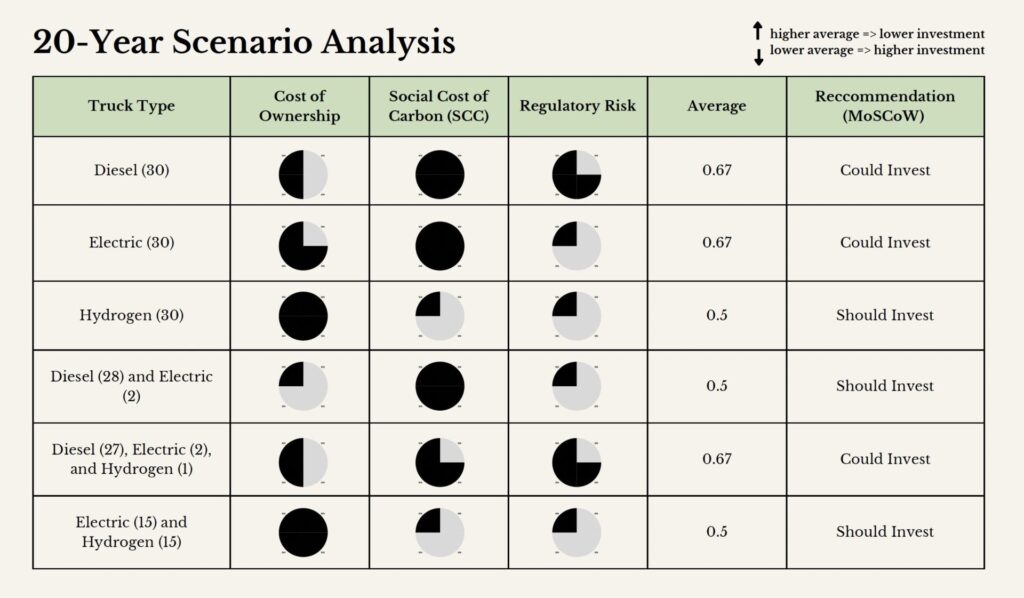
- Led a 20-year total cost of ownership analysis across diesel, electric, and hydrogen fleets
- Built a decision quality framework to structure tradeoffs between cost, emissions, and regulatory risk
- Conducted lifecycle emissions analysis and sustainable return on investment modeling
- Evaluated regulatory scenarios under different federal and California policy regimes
Key Insights:
- Full fleet electrification is costly but feasible only with phased adoption
- Hydrogen is not cost-competitive today, but may dominate under favorable policy and fuel cost scenarios
- A hybrid fleet strategy minimizes risk while maintaining regulatory compliance
- Policy uncertainty materially affects capital allocation decisions
Outcome:
Provided a clear phased investment recommendation and identified conditions under which hydrogen becomes a rational long-term choice.
Tools:
Financial modeling, scenario analysis, lifecycle assessment, policy analysis
Carbon Mineralization at Nickel Mines
Mining | Climate Tech | Carbon Removal
Problem
Mining is essential to the energy transition, but produces long-lived tailings with environmental risk. Can mine waste become a climate asset rather than a liability?
What I Did
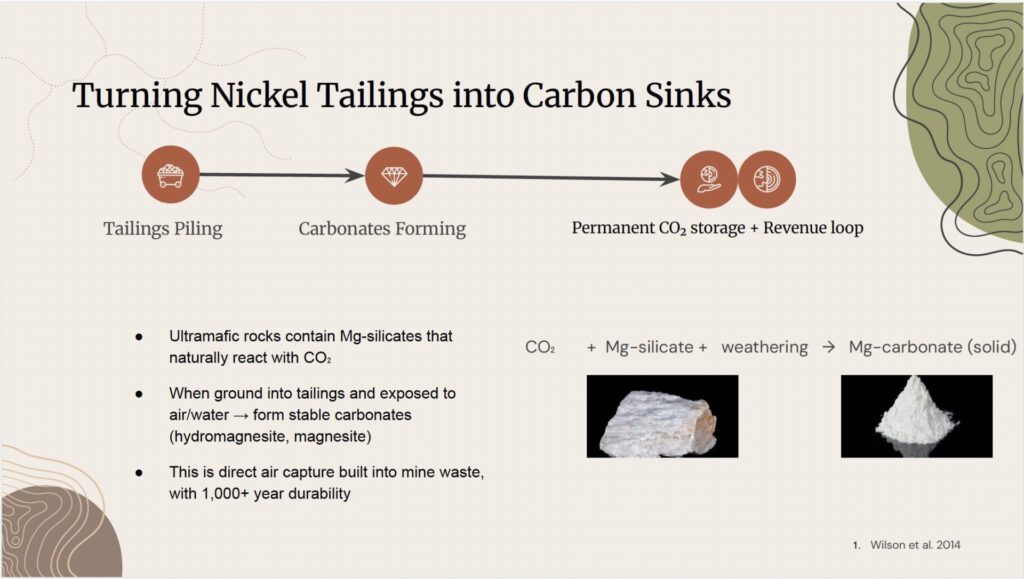
- Analyzed carbon mineralization potential in ultramafic nickel tailings
- Quantified removal rates using real-world case studies like Mount Keith and Baptiste
- Evaluated economic viability under voluntary and compliance carbon markets
- Assessed community and remediation co-benefits
Key Insights
- Tailings-based mineralization offers durable carbon removal with high permanence
- Removal potential is large enough to matter at the mine scale
- Carbon revenue could fund long-term monitoring and community benefits
- MRV quality is a core constraint to scaling
Why It Matters
This reframes mining waste as climate infrastructure and highlights how carbon markets could realign incentives around mine closure and stewardship.
Tools
Climate economics, market analysis, geochemistry synthesis